




International Education Fair 2023 Guide
Choosing a university abroad is rarely a decision made from a laptop screen alone. Sooner or later, most students want to sit across from a real admissions officer and ask the questions that matter. That is exactly the gap the International Education Fair 2023 fills for thousands of applicants across Central Asia.
What Is the International Education Fair 2023
The International Education Fair 2023 (IEF 2023) is Central Asia's largest study abroad exhibition, bringing foreign universities, education agencies, and prospective students together under one roof. It is organized jointly by the Bolashaq Development Fund and the Univero agency, two organizations with years of combined experience in international academic mobility.
The event's purpose is simple: reduce the distance between ambition and enrollment. Instead of scrolling through dozens of university websites, visitors can walk up to a booth, ask a direct question, and leave with a clear next step. For universities, it is a chance to meet motivated candidates face to face rather than through an inbox.
Register now to secure a spot before slots fill up.
Organizers: Bolashaq Development Fund & Univero
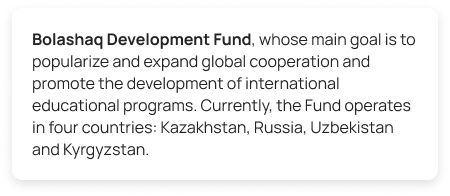
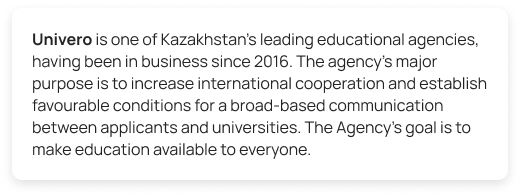
Bolashaq Development Fund has long supported academic exchange programs across Kazakhstan, building relationships with government bodies and universities alike. Univero, meanwhile, operates as an education agency with a network spanning Kazakhstan, Russia, Uzbekistan, and Kyrgyzstan, helping students navigate applications, visas, and scholarships. Together, the two organizations combine institutional credibility with hands on regional reach, which is largely why the fair has grown into the region's flagship education event.
Mission and Goals of IEF
The fair's stated mission is to widen access to international education across Central Asia. That means more than filling a hall with brochures. Organizers aim to create direct dialogue between students and universities, encourage cross border partnerships, and give smaller regional institutions the same visibility as globally recognized names. The long term goal is a more connected, transparent education market where a student's zip code does not limit their options.
Fair Statistics and Growth Since 2017
Numbers tell the story better than any marketing copy could. Since its first edition in 2017, the International Education Fair has grown from a modest regional gathering into an event that draws tens of thousands of visitors annually. As of the 2023 edition, the fair has welcomed more than 40,000 attendees, hosted representatives from 25 countries, and featured over 60 foreign universities.
| Year | Attendees | Countries Represented | Participating Universities |
|---|---|---|---|
| 2017 | First edition launch | Regional focus | Early partner universities |
| 2019 | Steady growth | Expanded beyond Kazakhstan | Growing university roster |
| 2023 | 40,000+ | 25 | 60+ |
Key Numbers: Attendees, Countries, and Universities
The 2023 edition alone accounts for a meaningful share of the fair's cumulative reach. Over 40,000 attendees passed through the doors, engaging with delegates from 25 countries and more than 60 foreign universities. For context, that is roughly the population of a small city funneled into a single weekend of academic networking.
Timeline of Past Editions (2017 to 2023)
Each edition of the fair has added something new. Early years focused on establishing trust with local universities in Kazakhstan. Later editions brought in agencies from Russia, Uzbekistan, and Kyrgyzstan, widening the pool of both exhibitors and visitors. By 2023, the event had matured into a full scale exhibition with structured consultations, guest speakers, and a noticeably international exhibitor list, a far cry from its first modest gathering.
Who Can Participate: Visitors & Exhibitors
Two distinct groups make up the fair's audience: people who want to study abroad, and organizations that want to reach them. Both have a clear, low friction path to join.
- Choose your role: visitor, exhibitor, or partner.
- Fill out the relevant registration form.
- Confirm your details and receive an entry pass or exhibitor package.
- Attend the fair and make direct contact with universities or students.
Register as a visitor or apply as an exhibitor to get started.
How to Register as a Visitor
Students and recent graduates can sign up for free through the fair's online registration form. Once confirmed, visitors gain access to the exhibition hall, consultation booths, and any scheduled workshops. No prior appointment is required to speak with most university representatives, though popular booths can get busy during peak hours, so arriving early is worth considering.
How to Become an Exhibitor or Partner
Universities, education agencies, and language schools can apply for exhibitor status to showcase programs directly to a highly targeted audience. Exhibitor packages typically include booth space, promotional materials distribution, and inclusion in the official participant list. For organizations trying to grow enrollment from Central Asia, the fair offers a concentrated dose of market exposure that would otherwise take months of individual outreach to achieve.
Full List of Confirmed Participants
A complete, regularly updated roster of confirmed universities, agencies, and special guests is maintained on the dedicated participants page. Checking it beforehand helps visitors plan which booths to prioritize during their visit.
What to Expect at IEF 2023
Walking into the fair for the first time can feel a bit overwhelming, given the scale of it. Here is what typically fills the day:
- One on one consultations with university admissions staff
- Workshops on scholarships, visas, and application strategy
- Booths representing dozens of countries and institutions
- Networking sessions with alumni and current international students
As Zhanbolat Meldeshov, CEO of the organizing team, has noted, the fair's value lies not in the brochures handed out but in the conversations that happen because of them.
Meet Industry Experts and University Representatives
Delegates from partner universities attend specifically to answer admissions questions on the spot. Visitors can ask about tuition, scholarships, program structure, or campus life without waiting weeks for an email reply. This direct access is often what separates a vague interest in studying abroad from an actual application submitted a few weeks later.
Networking and Special Guests
Beyond the booths, the fair usually hosts guest speakers, alumni panels, and informal networking sessions. These moments matter because they let prospective students hear unfiltered experiences from people who have already gone through the process, something no admissions brochure can fully replicate.
Frequently Asked Questions About IEF 2023
When and where is the International Education Fair 2023 held?
Exact dates and venue details are published on the official event page closer to the fair, typically covering major cities across Kazakhstan and neighboring Central Asian countries.
How can I register for IEF 2023 as a student?
Visitors can register online through the official registration form, a process that usually takes just a few minutes and does not require a fee.
Which universities participate in IEF 2023?
Over 60 foreign universities from around 25 countries take part, with the full list available on the participants page ahead of the event.
Is participation in IEF 2023 free for visitors?
Yes, entry for students and graduates is generally free, since the fair is designed to remain accessible to as many prospective applicants as possible.
How can my organization become an exhibitor at IEF 2023?
Organizations can apply through the exhibitor registration form, after which the organizing team reviews the application and